
The Name Nyanga
For long, many people have asked me what my name means, confusing me to be kenya or Zimbabwean because of the National Park, even though I would like visit it one day, my name has a story of its own, and it follows below.
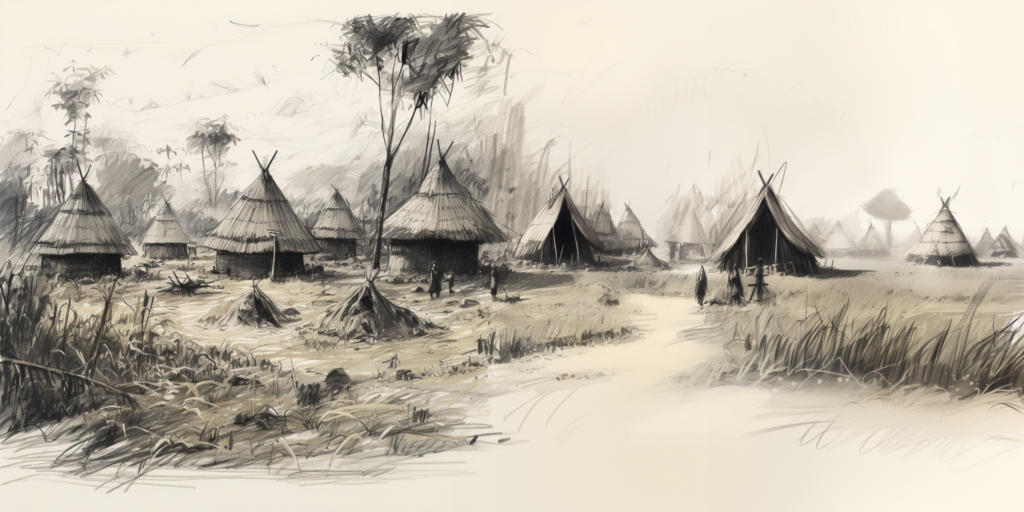
In the land of the Baganda people, there was a name that was not very common. It was not given to many children, despite its rich history and meaning.
You see, Nyanga had been around for generations, passed down from the elders to the younger generations through storytelling. But over time, the true meaning of Nyanga had been lost, twisted into something negative and frightening.
The Baganda people lived in small clans, surrounded by dense forests filled with all sorts of creatures, from tiny insects to mighty predators like lions and leopards. The clans relied on the forests for everything, from food and shelter to medicine and tools.
But there was a problem. Sometimes, the predators would venture too close to the clans, hunting for food. And when they did, the people would run for their lives.
The predators were fast and fierce, and often they could cut off the people before they reached the safety of their clans. This caused great fear and panic among the people, and something needed to be done.
So the Baganda people came up with a plan. They dug deep holes in the ground, deep enough that once the predators fell in, they couldn’t come out. The holes were camouflaged with vegetation and sometimes a hut was placed on top to trick the predators into thinking that people lived there.
These holes were called Nyanga, which meant “savior” in the Baganda language. Whenever the predators chased after the people, they would run towards the nearest Nyanga, and the predators would fall into the trap.
Nyanga became a symbol of safety and protection for the Baganda people. It was a solution to a problem that had plagued them for years. But over time, the true meaning of Nyanga was lost, and people started associating it with negative things like trouble and danger.
The Baganda people, however, still knew the true meaning of Nyanga. They knew that it was a powerful tool for survival and that it represented the ingenuity and resourcefulness of their ancestors.
So the next time you hear the name Nyanga, remember its true meaning. Remember that it is a symbol of strength and courage, and that it represents the determination of the Baganda people to overcome even the most daunting challenges.
To add more visuals and movement to the story, you could include illustrations of the Baganda people and their clans, as well as the predators that roamed the forests. You could also add action scenes, depicting the predators chasing after the people and the people running towards the Nyanga holes for safety.
To add drama and suspense, you could describe the fear and panic that the people felt when they were being chased by the predators. You could also describe the ingenuity and resourcefulness that it took to come up with the Nyanga solution, and the relief and joy that the people felt when they knew they were finally safe from the predators.
Overall, this story has the potential to be a thrilling adventure tale that celebrates the history and traditions of the Baganda people. With the right illustrations and storytelling techniques, it could become a classic children’s book that inspires generations to come.